 CNV Connect
The employee file everything else points at
Records, contracts and renewals, departments, the org chart, leave requests and yearly balances — the master list that attendance, assets and approvals all read from.
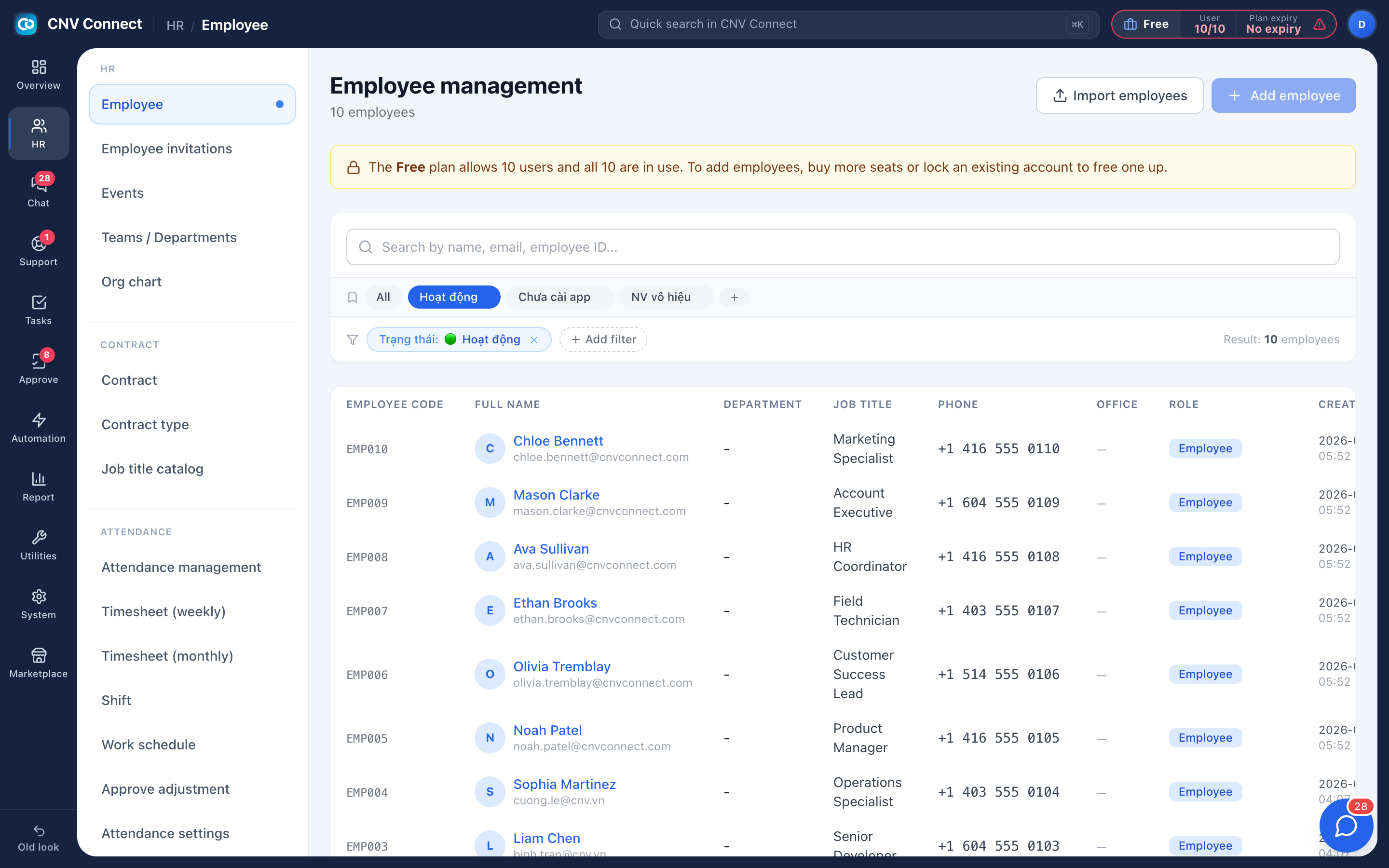
One record per person
Identity, employment data, contracts, attendance history, leave balance, assets held and documents.
Contracts with dates
Working queues for expiring soon, overdue, expired and missing signed copies.
Leave that adds up
Granted, carried forward, adjusted, used and remaining — each one a visible column.
Structure that routes
Departments carry the manager approvals are sent to; the org chart documents the reporting lines.
Onboarding without a checklist in somebody's head
Create the record, invite the person, put them in a department, assign a shift, hand over the equipment. Every one of those is a page in the same workspace, and each leaves the trail the next audit will ask for.
- Import an existing spreadsheet; matching employee codes update instead of duplicating
- Invitations are per e-mail address and consume one seat when redeemed
- Disabling a leaver keeps their history and frees the seat
- HR events surface birthdays, anniversaries and probation ends
Leave that agrees with the timesheet
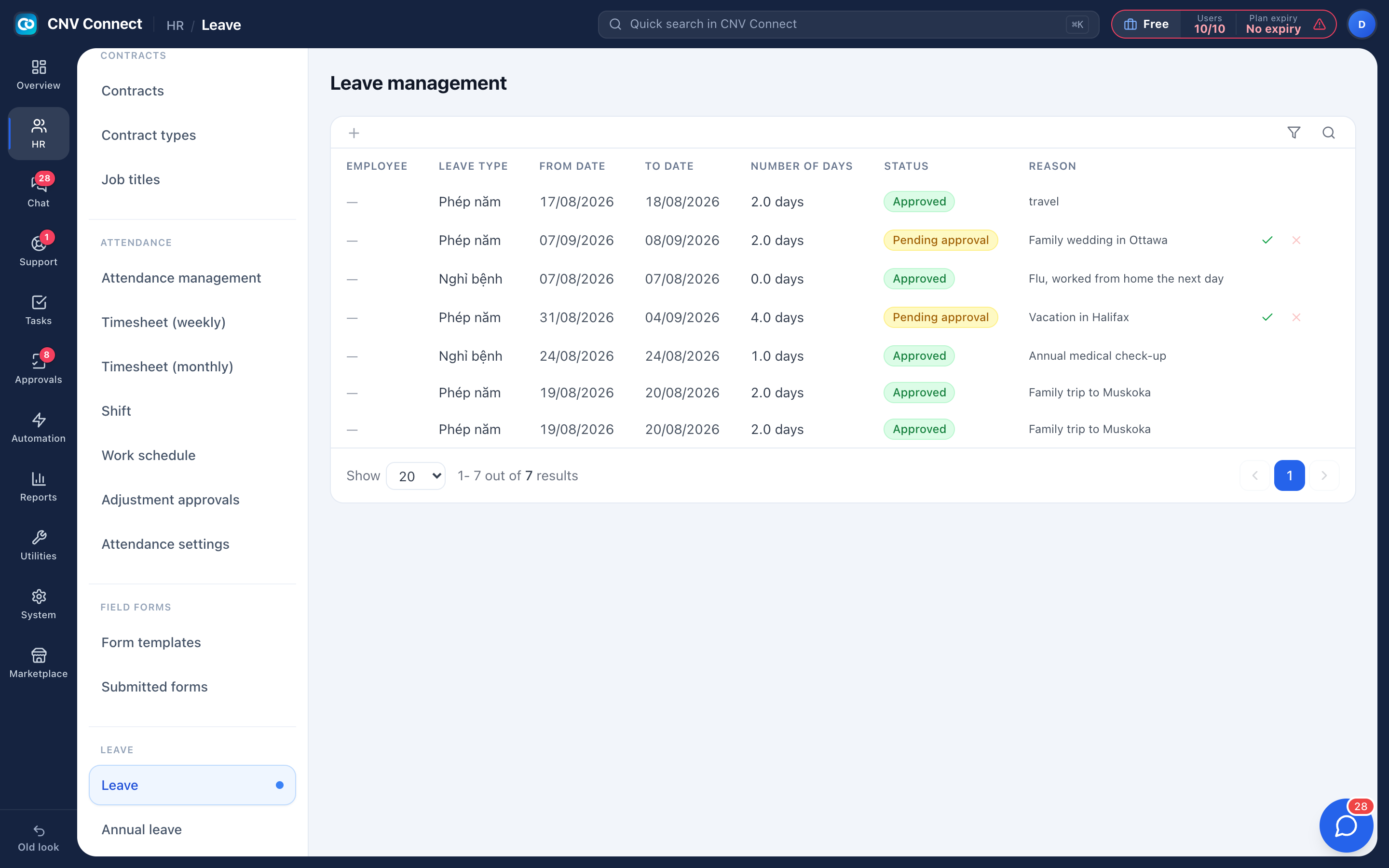
Requests route through the approval chain of their template, usually to the department manager. Approved days appear on the monthly timesheet under their code and stop the person being counted absent — which is why approving promptly matters more than it looks.
- Accrual policy, bulk grants and per-person adjustments with a reason recorded
- Public holiday calendar per year, including make-up working days
- Balances are arithmetic you can show the employee: granted + carried + adjusted − used
How teams set this up
- Add your people, one by one or by import.
- Create departments and name their managers.
- Record contracts and set the renewal warning window.
- Run the yearly leave grant and let requests flow through approvals.
Frequently asked
Is an employee record the same as a user account?
No. The record is the HR file; the account is what signs in. A new hire needs both.
Can managers see only their own team?
Yes — permissions are per role, and some pages are additionally scoped to the viewer's team.
Can we delete somebody who left?
Disable them instead. Deleting would orphan attendance and approval history that you may need.
Works with
Approvals
Leave, overtime, expenses, business trips, attendance corrections — design the form, decide who signs and in what order, and let the system chase everyone.
Time clock & attendance
People clock in from their phone inside a location you registered.
Assets & equipment
Laptops, tools, vehicles and phones with a movement log — plus the online accounts and subscriptions you pay for every month.
Get your whole team on one system this week
The Free plan covers 10 users with every module switched on — no card, no sales call, no migration project.
Free forever for 10 users · no credit card · set up in an afternoon